
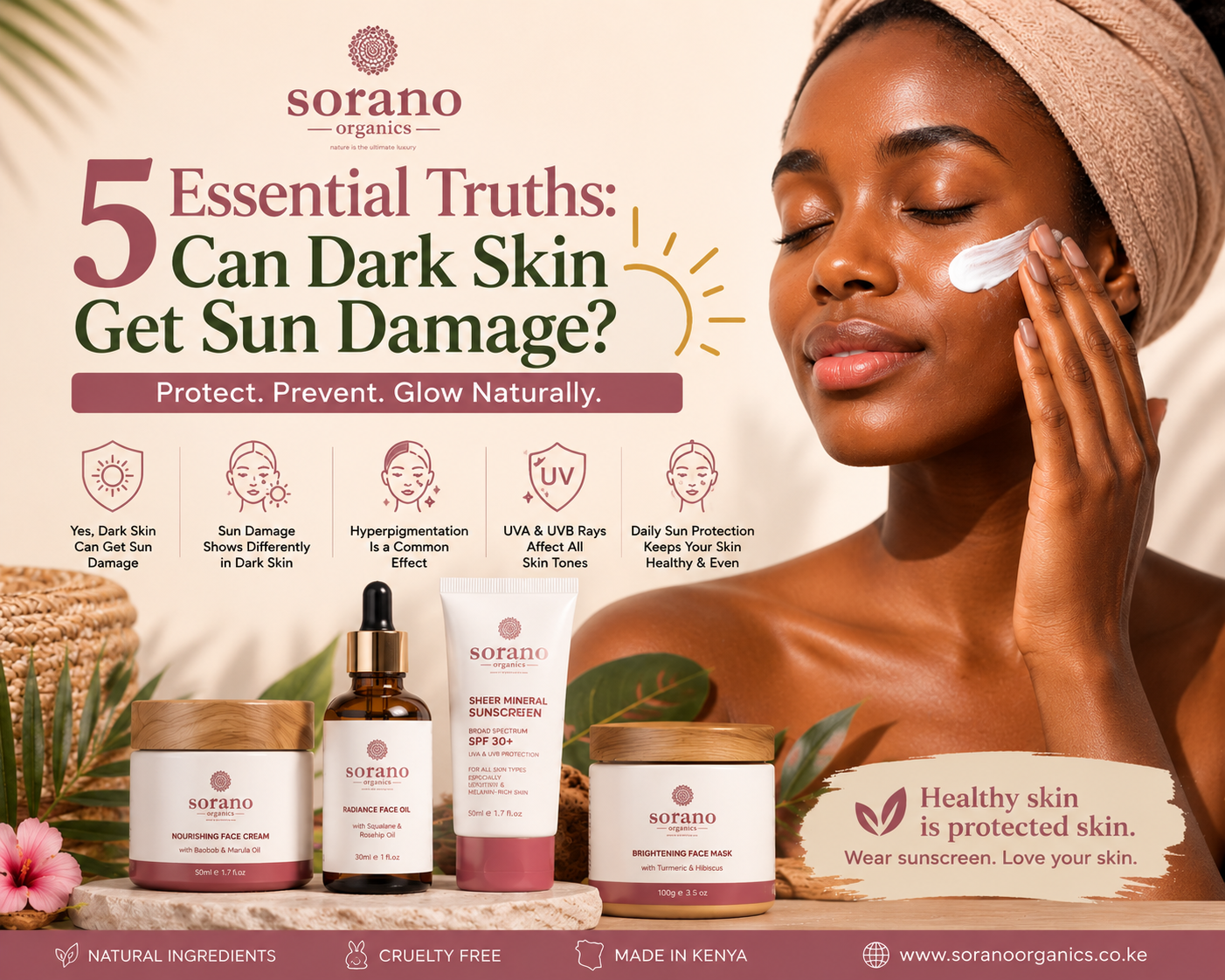
5 Essential Truths: Can Dark Skin Get Sun Damage?

Can Dark Skin Get Sun Damage? A Complete Skincare Guide
Dark skin is often believed to be naturally protected from the sun—but this is only partly true. While higher melanin levels provide some defense, dark skin can still experience sun damage, hyperpigmentation, and long-term skin aging when exposed to UV rays without protection. Sunscreen is essential for protecting melanin-rich skin from hyperpigmentation and long-term UV damage. You can explore our detailed guide on Sunscreen for Dark Skin in Kenya for recommended protection solutions.
Studies show that ultraviolet (UV) radiation affects all skin tones, although the signs may appear differently in darker skin.
At Sorano Organics, we believe in educating people of colour on gentle, natural skincare that protects and enhances melanin-rich skin.
What Is Sun Damage in Dark Skin?
Sun damage refers to the harmful effects caused by prolonged exposure to ultraviolet (UV) rays from the sun. These rays penetrate the skin and can lead to:
- Dark spots (hyperpigmentation)
- Uneven skin tone
- Premature aging
- Loss of skin elasticity
- Dull complexion
Many people wonder, can dark skin get sun damage? Even though dark skin contains more melanin, which offers some natural UV protection, it is simply not enough to fully block these harmful effects. Without proper daily protection, UV rays will still breach the skin’s defense layers and cause deep cellular harm.
What Is Melanin’s Role in Sun Protection?
MelaMelanin is the pigment responsible for skin color. It helps absorb and scatter UV rays, reducing their impact on deeper skin layers.
However, if you are wondering if this natural protection is enough, or can dark skin get sun damage, the reality is clear:
- Melanin only provides limited natural SPF (around SPF 4–13)
- It does NOT block all UVA and UVB rays
- Long-term exposure still causes deep cellular skin damage
This means dark skin may be less likely to burn, but it is still highly vulnerable to sun damage over time without proper daily protection.
Can Dark Skin Get Sunburn?
Yes—dark skin can absolutely get sunburned, but the presentation may look different than it does on lighter skin tones. When asking can dark skin get sun damage, many people look for bright red patches, which rarely appear on deeper complexions.
Instead of visible redness, symptoms of sunburn may include:
- A warm or tight feeling on the skin
- Itching, tenderness, or increased sensitivity
- A noticeable darkening or deepening of the skin tone
- Flaking or peeling after a few days
Because these symptoms are less visually obvious, sunburn and acute sun damage in dark skin are often detected late, increasing the overall risk of long-term cellular damage.
What Are the Effects of Sun Damage on Dark Skin?
Sun exposure in melanin-rich skin can lead to:
1. Hyperpigmentation
Dark patches caused by excess melanin production.
2. Uneven skin tone
Areas of the face or body may appear darker than others.
3. Premature aging
Fine lines, wrinkles, and loss of elasticity.
4. Skin sensitivity
Increased irritation and dryness over time.
What Is the Best Way to Protect Dark Skin?
Best ways to prevent sun damage:
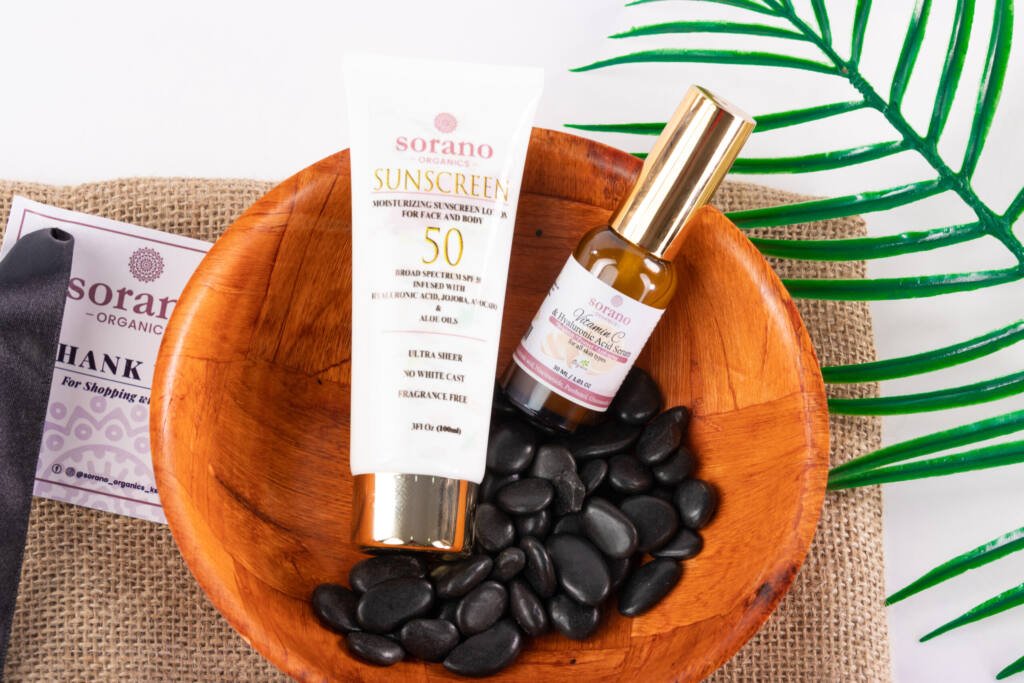
- Use sunscreen daily (SPF 30 or higher)
- Wear protective clothing and hats
- Avoid peak sun hours (10am–4pm)
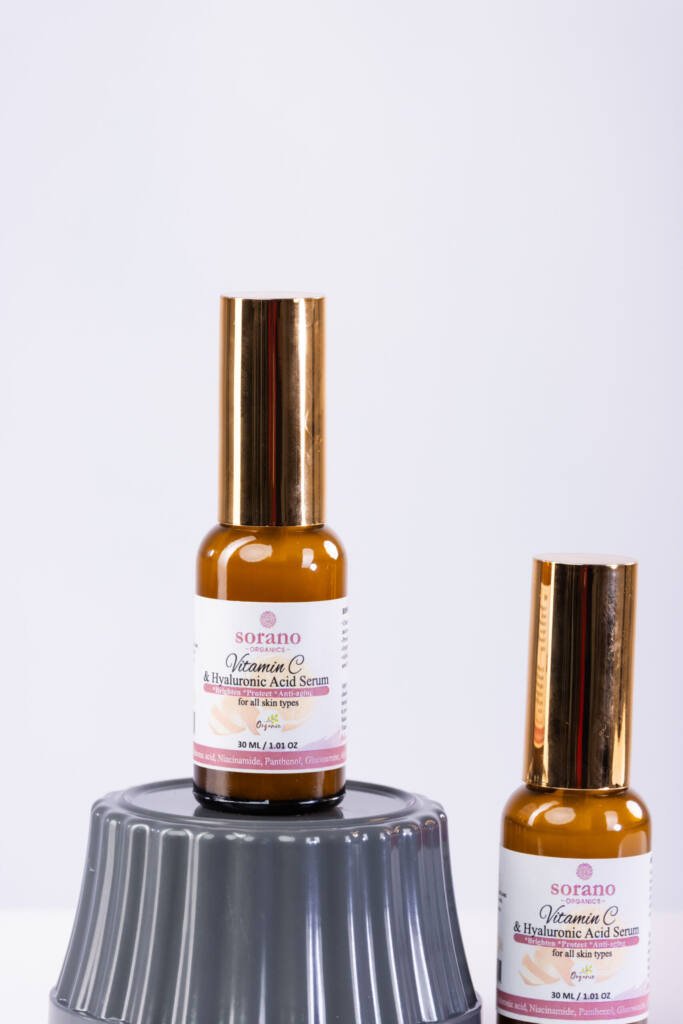
- Use antioxidants like Vitamin C in skincare
- Stay consistent with hydration and moisturization
Even dermatologists recommend sunscreen for all skin tones, as UV rays affect everyone.
Benefits of Sun Protection for Dark Skin
Understanding how to protect your skin answers the critical question: can dark skin get sun damage? The answer highlights why daily defense is so important. Using sun protection consistently helps to:
- Prevent dark spots and stubborn, uneven skin tone
- Maintain a glowing, radiant, and even complexion
- Slow down the signs of premature aging, such as fine lines and wrinkles
- Support and strengthen a healthier skin barrier against environmental stressors
- Enhance the overall results and efficacy of your natural skincare products
At Sorano Organics, natural skincare works best when combined with proper sun protection habits.
Best Natural Skincare Routine for Sun Protection
A simple, effective daily routine is the best way to safeguard your skin. If you are still asking yourself, can dark skin get sun damage, implementing these protective steps every single day will give you the answer by maintaining your skin’s health and radiance.
A simple routine for melanin-rich skin:
Morning:
- Gentle cleanser
- Vitamin C serum
- Lightweight moisturizer
- Sunscreen (SPF 30+)
To see exactly how to layer these products, pick the right ingredients for your skin type, and unlock a radiant complexion, check out the complete step-by-step morning skincare routine for glowing skin.
Evening:
- Cleanser
- Brightening treatment (natural ingredients like aloe or turmeric)
- Hydrating moisturizer
There is a common misconception that individuals with darker complexions do not need to worry about sun protection. However, dermatological data answers the definitive question, can dark skin get sun damage, with a resounding yes:
- UV Radiation Affects All Skin Tones: Ultraviolet (UV) rays from the sun do not discriminate; they penetrate and affect skin cells across all racial and ethnic backgrounds.
- Melanin Is Not a Complete Shield: While darker skin naturally contains more melanin—which absorbs and scatters a portion of UV radiation—this natural barrier is entirely insufficient to prevent long-term cellular and DNA damage.
- Later Detection Increases Danger: Because of a lower public awareness of risk and the fact that skin malignancies frequently appear in less sun-exposed areas (like the palms of the hands or the soles of the feet), skin cancer in darker skin is often detected at a much later, more advanced stage, making timely protection and awareness critical.
According to official Skin Cancer Foundation statistics, this delay in diagnosis dramatically impacts outcomes. Black patients face an estimated five-year melanoma survival rate of just 70%, compared to 94% for white patients, making early detection and proactive daily sun protection absolutely life-saving.
FAQs
What is sun damage in dark skin?
It is the harm caused by UV rays, including dark spots, uneven tone, and premature aging.
How does melanin protect the skin?
Melanin absorbs UV rays and reduces their penetration, but it does not fully block them.
Can dark skin get sun damage?
Yes, but it may appear as darkening, irritation, or sensitivity instead of redness.
What are the best ways to prevent sun damage?
Use sunscreen, wear protective clothing, and avoid excessive sun exposure.
Does dark skin need sunscreen?
Yes. Sunscreen is essential for preventing pigmentation and long-term skin damage.
Final Thoughts
Dark skin is beautifully rich in melanin, but it is not immune to sun damage. If you have ever wondered, can dark skin get sun damage, the scientific and medical reality shows that daily protection is absolutely vital. Understanding how UV rays affect your skin helps you effectively protect, balance, and maintain a healthy, glowing complexion.
With consistent care and natural skincare solutions from Sorano Organics, you can keep your skin radiant, protected, and balanced all year round.

